IDENTITY
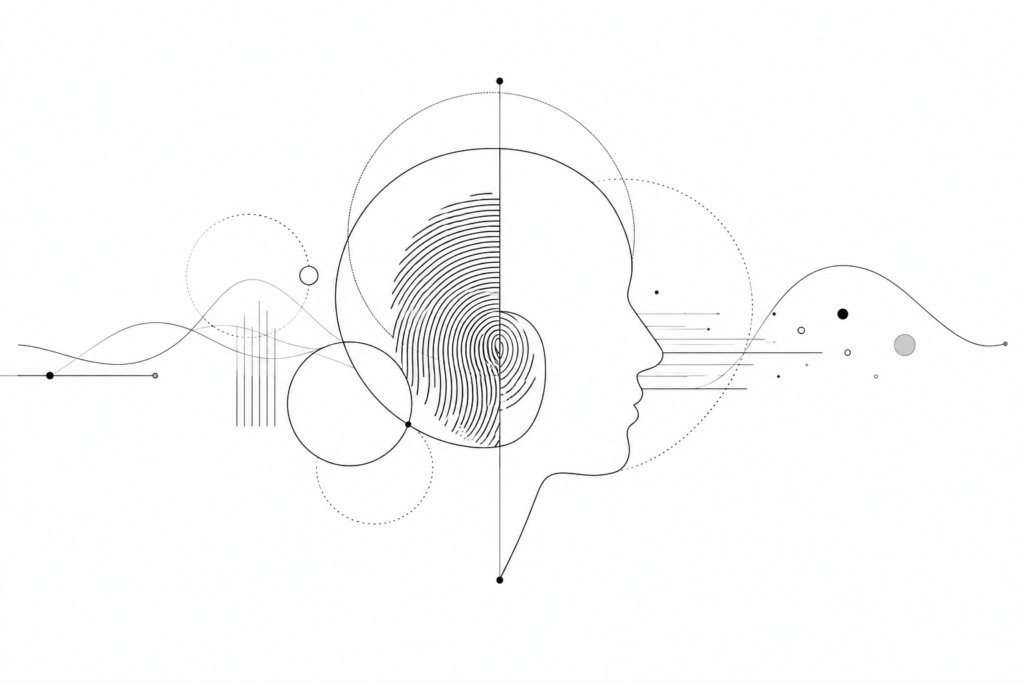
Identity is how a person, place or institution becomes recognisable - and how recognition becomes power.
Identity is often presented as an inner truth or an outer image. SENSELAX studies the movement between the two. People name themselves, inherit histories, perform roles and form attachments; they are also classified by institutions, markets, technologies and strangers. Identity is lived through language, appearance, gesture, memory, sound, clothing, space, documents and digital traces. It is personal, but never only private.
BEYOND THE FAMILIAR FIVE
A community, school, neighbourhood or organisation is frequently sensed before it is understood. Its entrances communicate welcome or suspicion. Its rhythm suggests urgency or care. Its materials, voices, smells, silences and rituals create an atmosphere of belonging, authority or exclusion. These impressions are not superficial. They shape whether people approach, trust, participate, speak or withdraw. We examine identity as a sensory environment as well as a narrative.
IDENTITY IS LEARNED, NARRATED AND STAGED
The initiatives connected to SENSELAX approach identity through different practices. Physiognomy at School works through intercultural and community education, helping learners and educators engage with diverse perspectives and local knowledge. Learn Cultural Identity (LearnCuID) develops cultural understanding through collaborative study, mentorship, literature and translation. SIDINL foregrounds how marginalised people narrate experience in their own terms, particularly where institutions, dominant languages or public categories fail to hear them. Physiognomy Mystery explored how a private community and luxury-facing arts, culture, entertainment and tourism experiences produce belonging through privacy, exclusivity, aesthetics, trust and participation. SENSELAX does not present these initiatives as physiognomic thinking. It studies what their different practices reveal about how identities are taught, voiced, staged, branded, protected and contested.
No identity is produced by self-expression alone. Forms, passports, school records, job titles, databases and algorithms place people into categories that open some routes and close others. Race, ethnicity, gender, class, age, disability, profession, religion, citizenship and place can become sources of community and meaning, but also grounds for prediction and control. SENSELAX asks who creates a category, which evidence it uses, how stable it becomes and what happens to people who do not fit.
POSSIBLE OUTCOMES
Identity is not the answer to “What are you?” once and for all. It is the ongoing negotiation of who can name, who can be recognised, and how recognition might become a form of dignity rather than control.
DESIGNING IDENTITY RESPONSIBLY
Identity design can help a group articulate purpose, recognise its histories and communicate across difference. It can also become a mask that replaces structural change with attractive language. SENSELAX approaches naming, visual systems, narratives, rituals and community platforms as research-led practices. We ask whose story becomes central, which symbols carry contested meanings, how sensory access is supported, and whether the identity can evolve without losing accountability. A strong identity does not force uniformity; it creates a recognisable space in which plurality can remain visible.